
Design Guides
Traditional Kerala Home Interior: Nalukettu and Heritage Design
How to modernise a traditional Kerala nalukettu interior while honouring the nadumuttam courtyard, teak and stone. A heritage design guide for Palakkad homes.
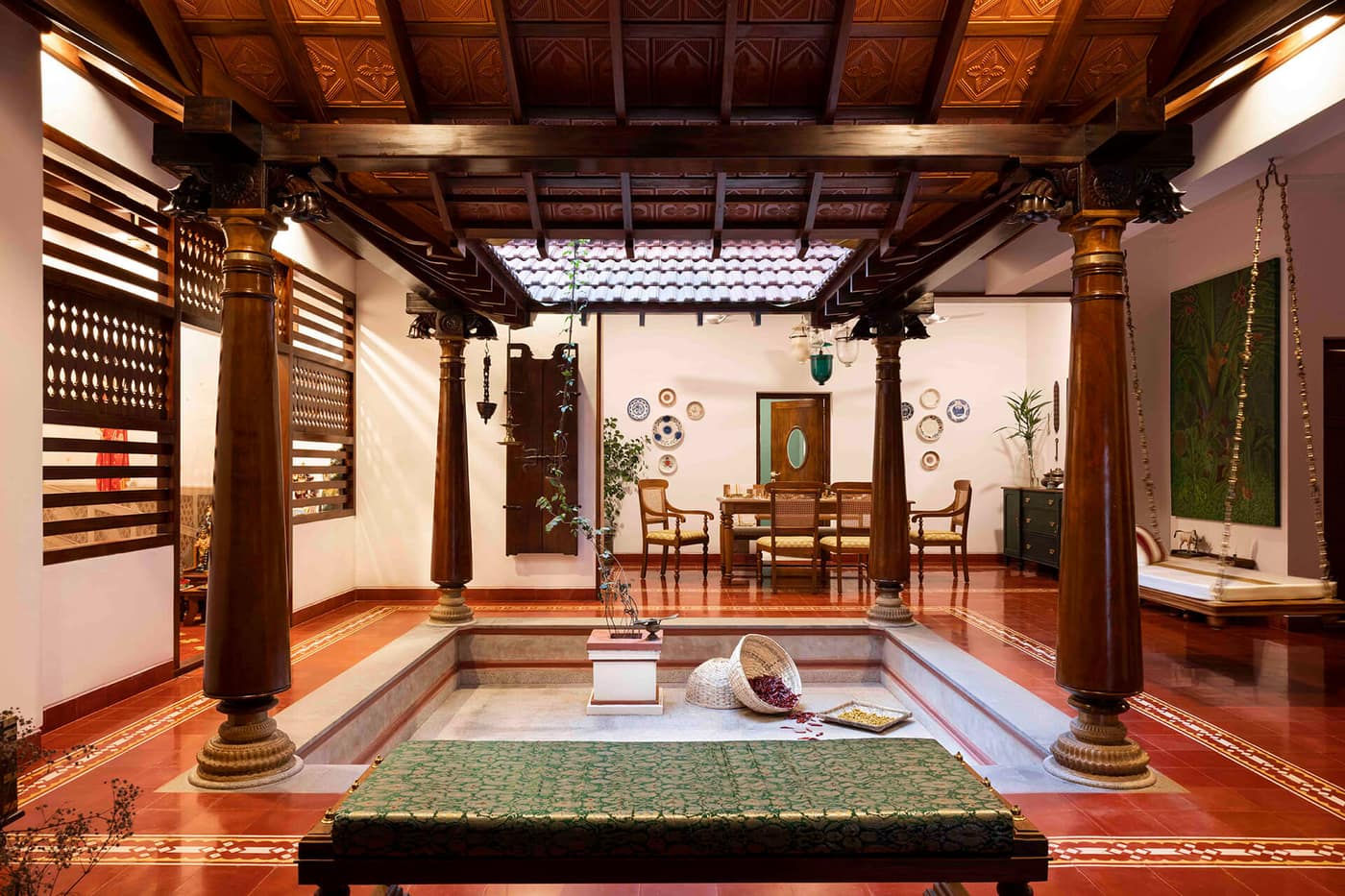
Kerala’s traditional nalukettu, the four-sided courtyard home, is one of India’s most architecturally distinctive domestic spaces. When modernising or refreshing its interior, the challenge is honouring the architecture’s character while introducing contemporary comfort, a modern kitchen, and durable materials for daily life.
What makes a nalukettu interior different
A nalukettu is organised around a central open courtyard, the nadumuttam, with four halls (vadakkini, thekkini, padinjattini and kizhakkini) arranged around it. The rooms are connected by a covered verandah. Ceilings are typically 12 to 14 feet high. Floors are traditional Athangudi tile or red oxide. Columns and beams are teak or rosewood.
These architectural features define what an interior approach must respect: the high ceilings, the connection to the courtyard, and the material palette of wood and stone. Any interior work that ignores them reduces rather than enhances the space.
Key design principles for nalukettu interiors
- Preserve ceiling height. Do not install false ceilings that reduce the perceived volume. If lighting infrastructure is needed, use recessed perimeter channels that preserve the ceiling height visually.
- Use the courtyard light. Arrange furniture and work surfaces to benefit from the natural light entering from the nadumuttam. A kitchen positioned near the courtyard side gains a natural-light advantage artificial lighting cannot replicate.
- Match material weight. Heavy teak and rosewood furniture in proportion to the scale of the rooms. Lightweight contemporary furniture looks undersized in nalukettu proportions.
- Respect the floor. Original Athangudi tiles and red oxide floors are heritage assets. Repair and restore rather than replace. Where new flooring is needed in non-original rooms, choose materials that complement rather than compete.
- Integrate the verandah. The covered verandah is an outdoor living space. Treat it as an extension of the interior, not a boundary.
Modern kitchen integration in a nalukettu
The original nalukettu kitchen was a separate cooking space with a wood-fire hearth. Modern families need a functional modular kitchen, and the challenge is integrating it without disrupting the character of the surrounding spaces.
| Element | Heritage approach | What to avoid |
|---|---|---|
| Kitchen position | Retain or adapt the original kitchen location where possible | A modern kitchen visible from the nadumuttam |
| Cabinet colour | Warm wood tones: teak veneer or terracotta membrane shutters | High-gloss white or grey, which disconnects from the architecture |
| Countertop | Black granite or natural stone, matching the material palette | White quartz or synthetic surfaces, which read too contemporary |
| Hardware | Matte black or antique-brass powder-coated, period-appropriate | Bright chrome or polished silver, too contemporary |
| Overhead cabinets | Minimise; open shelving with traditional vessels is more authentic | Full overhead cabinets that block sight lines to original beams |
Expert tip: If you are restoring a nalukettu and want a contemporary modular kitchen, consider adding it as a new room that connects to the original structure rather than converting an original room. This preserves the heritage character while providing full modern kitchen functionality.
Lighting a nalukettu interior
Traditional nalukettu homes relied entirely on natural light from the nadumuttam and oil lamps for evening use. Contemporary lighting should work with this logic: maximise daylight flow from the courtyard, and use warm (2700K to 3000K) artificial lighting in the evening that complements rather than overwhelms the palette of teak, stone and clay.
Warning: Avoid cool white (5000K to 6500K) lighting in traditional Kerala home interiors. The blue-white quality is visually incompatible with warm wood tones and natural stone, and it makes heritage spaces feel like modern offices. Always specify warm or extra-warm white for nalukettu interiors.
Frequently asked questions
Can I add a modular kitchen to a traditional nalukettu without damaging its character?
Yes, with careful design. The key is selecting materials that complement the existing palette (warm wood-tone shutters, natural stone countertops, matte hardware) rather than introducing a visually disconnected contemporary kitchen into a heritage space.
Should I restore original Athangudi tiles or replace them with new flooring?
Restore where possible. Original Athangudi tiles are heritage assets with a patina that cannot be replicated by new tiles. Good restoration cleans, re-grouts and seals them, and the result is far more authentic than replacement. Replace only where tiles are structurally damaged beyond repair.
Does BYTS Interior have experience designing interiors for traditional Kerala homes?
Yes. We have designed and installed interiors in traditional Kerala homes across Palakkad district. Our senior designers understand the material palette, proportions and architectural context that make heritage home interiors successful.
Can BYTS Interior work with my architect or conservation specialist on a nalukettu project?
Yes. For heritage renovation projects we coordinate our interior scope directly with architects and conservation specialists, providing our material specifications and installation requirements in advance for full design coordination.
Disclaimer: This article reflects BYTS Interior's project experience and general practices in Kerala and South India. Costs, timelines, material performance and approvals vary with site conditions, market rates and local regulations. Consult a qualified professional before making financial, structural or technical decisions.
Ready to plan your space?
Free site visit across Palakkad, Thrissur, Kozhikode & Coimbatore. Our senior team visits at no charge.