
Materials
Monsoon-Proof Interior Design: 7 Rules for Kerala Homes
Kerala gets 2,500–3,500mm of rain a year and 85%+ humidity. Here are 7 material and design rules that keep your interiors from swelling, warping and moulding.
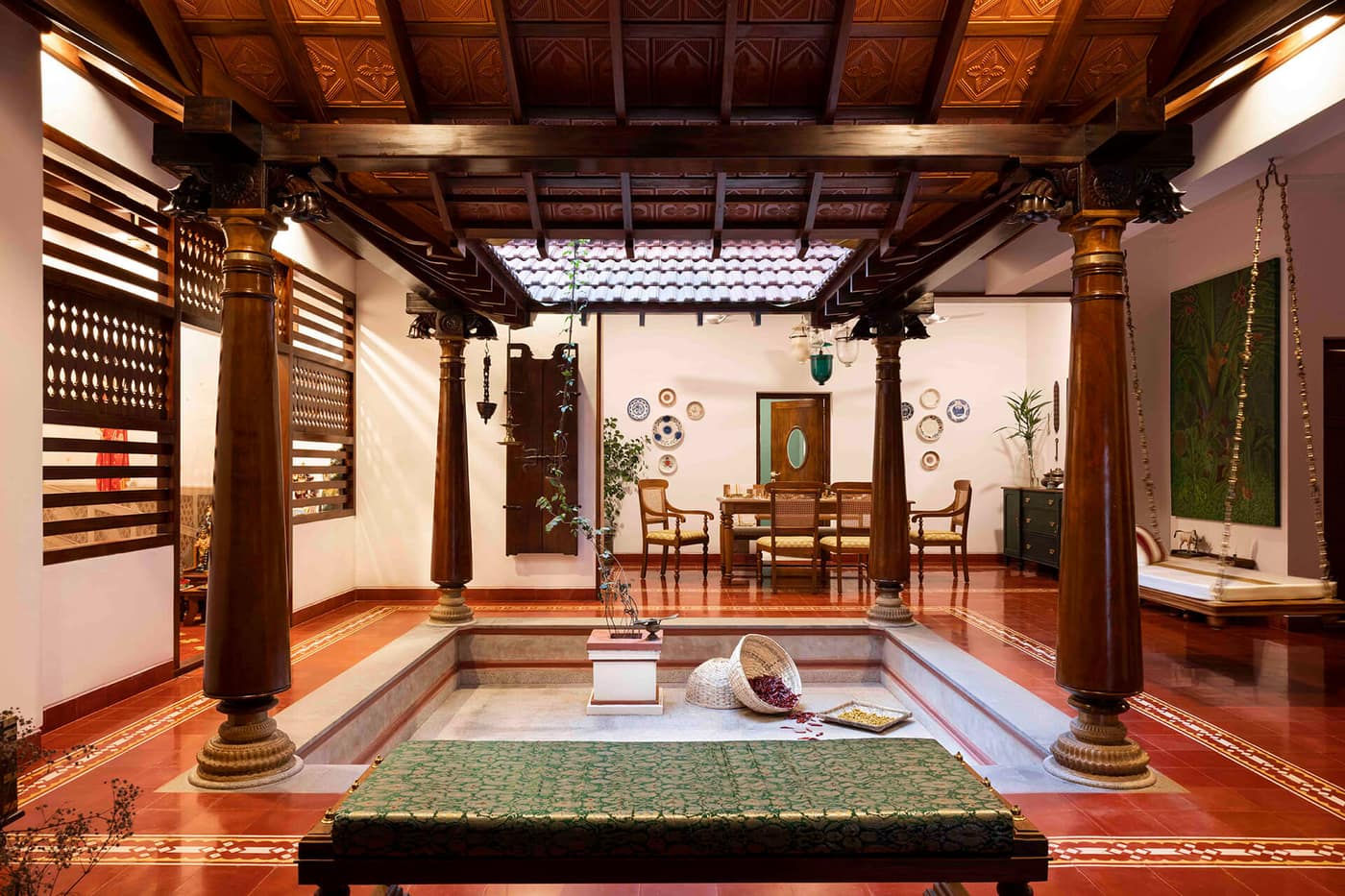
Kerala receives 2,500 to 3,500mm of annual rainfall, and humidity stays above 85% through the monsoon season. Every material decision you make at the design stage will be tested by this climate, year after year, for the next 10 to 15 years.
Why Kerala needs different rules
Most interior design advice in India is written for Bangalore, Mumbai or Delhi. Kerala’s monsoon is fundamentally different: longer, wetter and more sustained. Materials that work fine in drier climates absorb moisture, swell, warp and delaminate in Kerala within a few seasons.
Kerala receives more than twice the annual rainfall of Bangalore. The sustained humidity, not just the rain itself, is what destroys inferior interior materials. A modular kitchen that lasts 12 years in Bangalore may last three years in Palakkad if built with the wrong plywood grade.
Rule 1: BWP 710 marine plywood for all carcasses, without exception
BWP (IS:710) 710-grade marine plywood uses phenol-formaldehyde resin between the veneer layers and is tested to withstand boiling water, the highest moisture rating available in India. This is our standard for every kitchen and wardrobe carcass. Cabinets built with lower-grade plywood in Kerala typically show swelling at the base units within two monsoon seasons: the box warps, doors misalign and drawers stick permanently.
Never allow a contractor to substitute MR (Moisture Resistant) plywood for the carcass in Kerala kitchens or wardrobes. MR plywood uses a weaker resin that is not rated for sustained humidity. The boards look identical once cut and installed; the difference only becomes visible after one monsoon season.
Rule 2: Anti-fungal emulsion on all walls
Standard interior emulsion supports mould growth in Kerala’s humidity. Anti-fungal emulsion prevents the black moulding that appears on bathroom walls and damp exterior-facing walls after one monsoon. Apply two coats on all bathroom walls, kitchen backsplash areas, and any wall on the west or south side of the home facing the primary monsoon wind direction.
Rule 3: Ventilation planned before installation
A modular kitchen without proper ventilation is a humidity trap. The chimney exhaust must be functional before modular units are installed. Upper cabinets above the cooking platform should have ventilated backs, and base cabinets near the sink need a 3 to 6 inch gap from the wall for air circulation.
Monsoon material comparison
| Material | Monsoon performance | Recommended use |
|---|---|---|
| BWP 710 marine ply (IS:710) | Excellent, survives 10+ monsoons | All kitchen & wardrobe carcasses (BYTS standard) |
| BWR plywood (IS:303) | Good: resistant, but below marine grade | Lower-cost carcasses in dry rooms |
| MR plywood | Poor, swells within 2 seasons | Avoid for kitchens in Kerala |
| MDF | Poor, absorbs moisture permanently | Decorative door faces in dry rooms only |
| Particle board | Very poor, fails within 1 season | Never use in Kerala interiors |
| Acrylic shutters | Excellent, fully moisture resistant | Kitchen doors throughout |
| Membrane (PVC) shutters | Very good, sealed surface | Kitchen & bathroom areas |
| Laminate shutters | Good in dry areas only | Bedrooms, with sealed edges |
| Chrome hardware | Poor, corrodes in 18 months | Avoid; use powder-coated only |
| Powder-coated hardware | Excellent, with an 8 to 10 year life | All hinges, channels, handles |
Rules 4 to 7
Rule 4: Powder-coated hardware throughout. Chrome-plated hardware corrodes in Kerala’s monsoon humidity within 18 to 24 months. Powder-coated stainless steel hinges and channels maintain function for 8 to 10 years.
Rule 5: No MDF or particle board near moisture. These materials absorb moisture and swell permanently, and they are unrecoverable once damaged. Never use them for kitchen carcasses, bathroom vanities, or any carpentry within 2 metres of a water source.
Rule 6: Anti-skid tiles in wet areas. During monsoon, entrance areas, utility rooms and bathrooms get wet feet constantly. Anti-skid textured tiles in all wet areas prevent the accidents that smooth polished tiles cause in Kerala monsoon conditions.
Rule 7: Cement-board around window reveals. Kerala homes with sliding windows facing the southwest monsoon need waterproof reveals. Use cement-board or PVC trim rather than gypsum board, which absorbs water during monsoon window splash.
Expert tip: Schedule your interior installation to complete before June. That means factory production in March to April, installation in April to May, and handover before the monsoon arrives. Starting in June and installing through the monsoon adds 2 to 3 weeks to your timeline and exposes new materials to moisture during installation.
Frequently asked questions
What is the biggest interior design mistake during Kerala monsoon?
Using lower-grade plywood for kitchens to save cost. Within two monsoon seasons, cabinet boxes swell, doors misalign and drawers stick permanently. Upgrading to BWP (IS:710) 710-grade marine plywood adds marginally to the project cost but avoids the far more expensive problem of full replacement.
How do I prevent black mould on Kerala bathroom walls?
Use anti-fungal emulsion (2 coats), make sure the exhaust fan is functional, and leave a 10mm gap between the back of any vanity cabinet and the wall for air circulation. Clean grout lines annually with diluted bleach.
Are false ceilings a problem in the Kerala monsoon?
Gypsum false ceilings are fine in protected interior rooms. Avoid gypsum in bathrooms or any room with a history of roof seepage, and use PVC panels for bathroom ceilings. Fix roof waterproofing before installing any false ceiling.
Does BYTS Interior follow these monsoon rules in every project?
Yes. BWP (IS:710) 710-grade marine plywood is our standard for every carcass, not an upgrade option. Powder-coated hardware is standard. We plan ventilation, anti-fungal treatment and material specifications into every Kerala project from the design stage.
Disclaimer: This article reflects BYTS Interior's project experience and general practices in Kerala and South India. Costs, timelines, material performance and approvals vary with site conditions, market rates and local regulations. Consult a qualified professional before making financial, structural or technical decisions.
Ready to plan your space?
Free site visit across Palakkad, Thrissur, Kozhikode & Coimbatore. Our senior team visits at no charge.